What Are PVC Conduit Pipes? Manufacturing Process, Properties & Uses
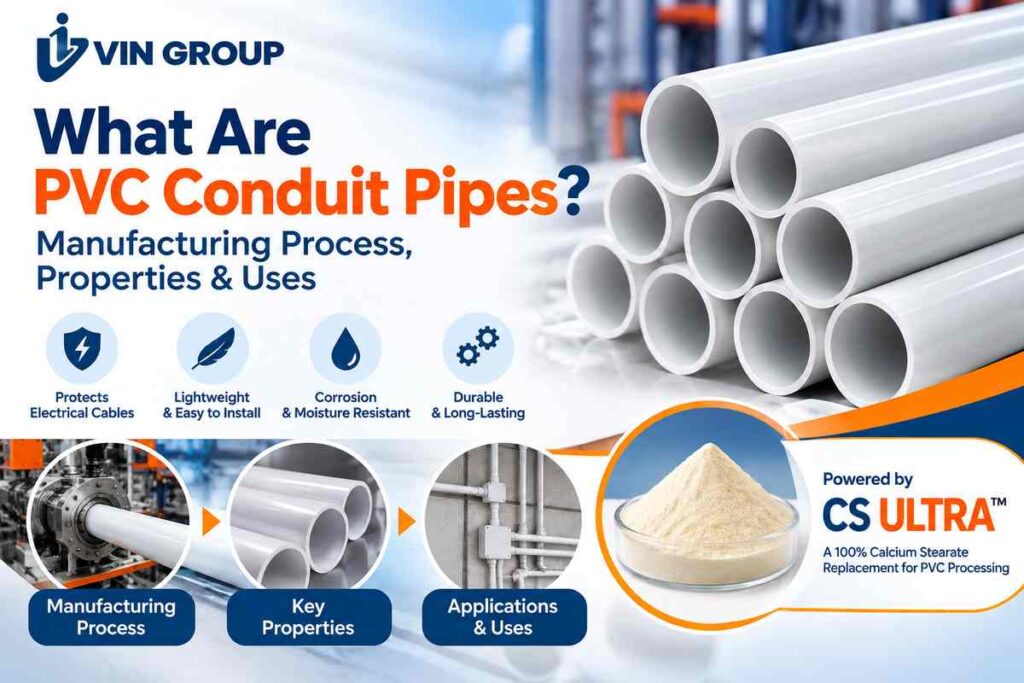
PVC conduit pipes are widely used in electrical installations to protect wires and cables from physical damage, moisture, and environmental exposure. Their lightweight construction, corrosion resistance, and ease of installation make them suitable for residential, commercial, and industrial buildings.
Understanding the manufacturing process, properties, and applications of PVC conduit pipes helps manufacturers, contractors, and builders choose suitable products for their projects.
What Are PVC Conduit Pipes?
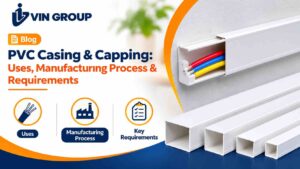
PVC conduit pipes are protective tubes manufactured from polyvinyl chloride (PVC), a durable thermoplastic material. They provide a pathway for electrical wires and cables inside walls, ceilings, floors, and other building structures.
These pipes are available in different sizes, thicknesses, and designs to meet various installation requirements. Compared with conventional metal conduits, PVC conduits are lightweight and do not rust. The appropriate product depends on the intended application and relevant electrical installation standards.
How Are PVC Conduit Pipes Manufactured?
The manufacturing process involves several stages to achieve the required dimensions, quality, and performance.
1. Raw Material Selection
PVC resin is the primary raw material. Manufacturers also select suitable additives, including heat stabilizers, lubricants, processing aids, impact modifiers, and pigments, depending on the required product specifications.
2. Mixing and Compounding
PVC resin is blended with selected additives in controlled proportions. Proper mixing helps distribute the ingredients evenly and supports consistent processing during extrusion.
3. Extrusion
The prepared PVC compound is fed into an extrusion machine, where heat and mechanical action soften the material. The compound then passes through a specially designed die that shapes it into a continuous pipe.
4. Cooling and Sizing
The hot pipe passes through a sizing and cooling system to achieve the required diameter and shape. Controlled cooling helps maintain dimensional consistency.
5. Cutting and Quality Testing
The pipe is cut into specified lengths and inspected for wall thickness, dimensions, surface finish, and other application-specific requirements. Appropriate testing helps ensure compliance with relevant product standards.
What Are the Key Properties of PVC Conduit Pipes?
PVC conduit pipes offer several useful properties for electrical installations:
- Corrosion resistance: PVC does not rust like conventional steel.
- Lightweight construction: Pipes are relatively easy to handle, transport, and install.
- Electrical insulation: PVC is an electrically insulating material.
- Moisture resistance: Suitable products can be used in damp environments according to their ratings.
- Durability: Properly selected and installed conduits can provide long-lasting service.
- Easy installation: Pipes can be cut and connected using compatible fittings.
Product performance depends on material quality, formulation, environmental exposure, and installation conditions.
What Are the Common Uses of PVC Conduit Pipes?
PVC conduit pipes are used in several construction and electrical applications.
Residential buildings: They provide pathways for electrical wiring in houses, apartments, and residential complexes.
Commercial buildings: Offices, schools, hospitals, and shopping centres use conduit systems to organize and protect electrical cables.
Industrial facilities: Factories and warehouses use suitable conduits for selected electrical installations, depending on environmental and mechanical requirements.
Underground cable routing: Conduits specifically rated for underground use can provide pathways for buried cables when installed according to applicable standards.
Communication systems: PVC conduits can also organize data, telephone, and communication cables.
Why Are Additives Important in PVC Conduit Manufacturing?
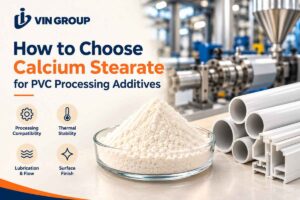
Additives play an important role in PVC processing. Heat stabilizers help protect the material from heat-related degradation, while lubricants help control friction and material flow during extrusion. Processing aids may also support consistent processing and surface quality.
Manufacturers must select additives according to the PVC formulation, equipment, production conditions, and finished-product requirements. An unsuitable formulation can affect extrusion stability, dimensional accuracy, and product performance.
Explore CS Ultra™ by VIN Group
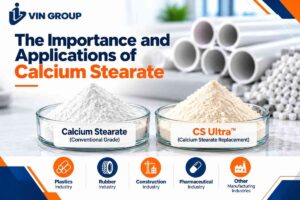
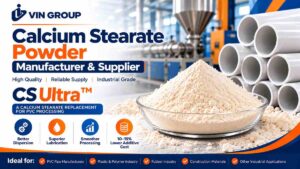
CS Ultra™ is a product of VIN Group, positioned as a 100% calcium stearate replacement for PVC processing applications.
Manufacturers exploring alternatives to conventional calcium stearate can evaluate CS Ultra™ according to their formulation requirements, processing conditions, and product specifications. Technical documentation and suitable production trials should be reviewed before changing an established formulation.
Visit csultra.com to learn more about CS Ultra™ and its potential applications in PVC processing.
Conclusion
PVC conduit pipes are essential components of many electrical installations because of their lightweight construction, corrosion resistance, insulating properties, and ease of installation. Their quality depends on appropriate raw materials, additive selection, controlled extrusion, and proper testing.
For manufacturers, understanding these factors helps support consistent production and reliable product quality. CS Ultra™ by VIN Group is an option to explore when evaluating calcium stearate replacement solutions for PVC processing.
Explore CS Ultra™
Calcium Stearate Replacement for Suitable PVC Applications
🌐 www.csultra.com
📞 +91 7403 7403 00